on disability

“The Authors Guild, of which I am a member, has done zilch to secure disability protection for writers. In my line of work, disability comes down to two things: memory loss and something else, I forget what. You lose the vocabulary retrieval skills you had when you were 30 and interesting words such as ‘parietal lobe’ and ‘sedimentary rocks’ flocked to your brain, and now you sit inert at the laptop for a number of horrendous minutes trying to remember the word for the thing that if you picked it up and dropped it on your foot it would be very, very bad — anvil! This is a disability, and a writer should be able to receive payments, and also for the other thing, whatever it is.”

– Garrison Keillor, Where’s my disability check? | Salon

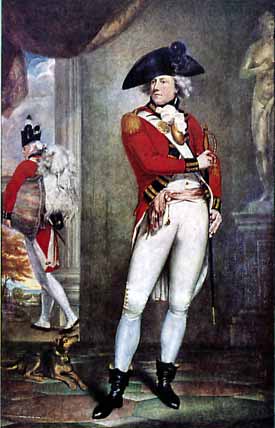
Carpal tunnel, Garrison! The other thing is CTD – carpal tunnel disease. It’s either that, or maybe AAS – anvil ass syndrome, which develops from years of sitting. It turns to solid iron, but not in a good way. See when you’re an English Major – pictured here – they tell you that the secret to success as a writer is AIC – ass in chair.

He’s not doing it right. I don’t see a chair, do you? I don’t even see a desk, just a dog. Oh well.

I’m very good at AIC. Regrettably, the computer in front of my C where I sit on my A is connected to NET, which stands for something else, I forget what.

spring

in Just-
spring when the world is mud-
luscious the little lame baloonman

whistles far and wee

– e e cummings

Welcome to spring, everybody; that time of year when the young poet’s mind admits of nature’s brighter hues: the fornication of the flowers. The dialectic intercourse of pollination. Of course, I’m not a young poet anymore. So my mind is more likely turned to thoughts of insurance. Smoke detectors. Tire inflation.

We have to get from here to there without incurring avoidable damages, don’t you agree? Although to be sure, no one here gets out alive.

Here in Carpinteria, we’re having an overcast and drippy day, not quite rainy. Only the very athletic and mildly stupid are out upon the thoroughfare on bikes. And at 9:45am, I’m still in my comfy sweats, in my warm and cozy study, sipping French Roast from an aging mug replete with contemplative standing geese. Meeting life head-on, but only on life’s most obsequious terms. There can be a certain passive aggression to Saturday mornings, a middling denial and avoidance of Monday’s inexorable strife.

… mixing
Memory and desire, stirring
Dull roots with spring rain.

Here’s a poem for today, in honor of poor lost winter, but not really about that at all.

Bee in January


It’s a winter way of looking at things,
of celebrating half-light and fog.
For instance, a bee I saw, just
for an instant, fumbling among
the camellias and darting past
the dog’s head. You’d almost believe
it was spring, forgetting the windmills
droning all night to save the lemon
trees from frost. But the chiminea,
warming in compassionate sunlight,
is half full of rain. And in January,
I prefer fog. I would rather have
a morning with the houses gray
and almost lost in it. With Papa
standing by the pickup, asking
if I’ve got good tires, a full tank
of gas, a map, some cash.
They called him Bee. He liked
a Timex watch, a good pen
in his pocket. Ballpoint, blue.
I had everything I needed, checked
everything but the weather.
So he stood there by his house
in the long, cold January, foggy
San Joaquin, breathing gray exhaust
in the gray world. He stood there,
waving as I disappeared.

J. Kyle Kimberlin
January 15, 2005
all rights reserved

Is E-Mail Dead?

“E-mail, once the most effective way to communicate with your tech-savvy associates, has become useless for too many people. Has anyone else noticed this phenomenon? It’s essentially dead.”

John C. Dvorak, 9 Reasons E-Mail Is Dead – PC Magazine

Oh Baloney. I guess if he was honest, the title would have been 9 Reasons Why I Don’ Like E-mail As Much As I Use To Because It’s Not As Useful As It Should Be. Which wouldn’t have been nearly as catchy.

Sure it’s annoying when people don’t answer, or don’t bother to check their e-mail for a week. Spamming should be a felony, and spammers should be in prison. But saying e-mail is dead because of such annoyances is like saying telephones don’t work because people won’t return your calls. Or that snail mail doesn’t work because of the obsolete stamps.

There’s nothing inherently wrong with the e-mail system; it’s the people who don’t use it right that make it a pain.

Come on, Dvorak, keep it real.

awkwardness

“I work from awkwardness. By that I mean if I stand in front of something instead of arranging it, I arrange myself.”

Diane Arbus, who would have been 86 today, if she hadn’t slipped betimes away from fields where glory does not stay, in 1971. (She offed herself, is my point.)


on writing – a.l. kennedy

“Sitting alone in a room for hours while essentially talking in your head about people you made up earlier and then writing it down for no one you know does have many aspects which are not inherently fulfilling. Then again, making something out of nothing, overturning the laws of time and space, building something for strangers just because you think they might like it and hours of absence from self — that’s fantastic.”

A.L. Kennedy

new Mark Twain story

“Mark Twain fans will be interested to hear that a never-before-seen Twain story, “The Undertaker’s Tale,’ long buried within an enormous body of unpublished stories, letters, and essays, appeared this week in the pages of mystery magazine The Strand.” [Link]

attending mystery

I was just going to post a vignette for you to read. I’m polishing it up to get it ready to submit for publication. I think it’s about ready to go. It’s got a clean shirt on, and a good hat to keep the rain of its little face. It’s awfully small – only two pages – to go out alone in the bold and verbose world, but I’ve done my best by it. All the rewriting set me to ruminating a bit, along these lines:

On a recent morning, drinking my coffee and listening to the critical whispers of my carpets, I read a very nice – meaning thoughtful and well-crafted – article in the LA Times about death. Rather, about a man who will soon see the end of his life, and whose lifelong career in thantology and suicide prevention has made him a unique subject for consideration in the matter of impending death.

I should clarify that if the perspective of this article is to be entertained, it is not this man who will see the end of his life. One’s death is experienced by others.

Here’s an excerpt from Waiting for death, alone and unafraid, Los Angeles Times:

“In death, things become mere things — the statue of Venus in the backyard, the gyotaku print in the kitchen, the Melville-inspired shadow boxes — no longer animated by memory, the story of their provenance. It is as if their atoms loosen and dissipate.

The meaning of death is loss and sadness and inevitability. On the wall above the bed, he has hung a print by Breughel that covers a crack in the plaster. Here an army of skeletons wages war against humanity, and compared to the Chagall overhead, it’s a bleak and macabre picture of the final hour that without angels or signs of salvation is unremittingly godless.”

Here’s a paradox: if death is experienced by others, and things become mere things, how is it that the things – mementos, memories – which are the legacy of our loved ones become so abjectly, enormously dear? I think the writer of that article has it backwards. Things are things until they’re all we have left. I have things that came to me from hands still warm and hands now beyond cold, and I have enough compassion for myself and those who gave them to me to know better than to call them mere.

The poet Rainer Maria Rilke wrote, “I live my life in widening circles that reach out across the world. I may not complete this last one but I give myself to it.”

What is such a widening circle? To me, it is a consciousness of compassion, and that consciousness is the function of poetry; in other words, the exploration of authentic human experience. We are all in this together.

There is a subset of authentic and universal human experience which we can call true for everyone, and which really make our emotions ring. These are the primary colors of our daily lives, the things which we carry everywhere, everyday, and which define us. They are love stripped of romance, fear free of titillation, and death devoid of pride. Also, the small moments and rare intangible things which offer consolation.

The problem for a poet who sits down with a notebook and a pen and hopes to dig in to truth is that these things are just so intangible. But then, intangible things are the poet’s brush and paint. We have to live with that. We have to stare death in the face because it is in the great commonality, and keep it right here – right here – in front of our dusty spectacles. And not blink. See the metaphor …. be the metaphor.

Does it help to be a little crazy?

Phenomenal nature shadows him wherever he goes. Clouds in the staring sky transmit to one another, by means of slow signs, incredibly detailed information regarding him. His inmost thoughts are discussed at nightfall, in manual alphabet, by darkly gesticulating trees. Pebbles or stains or sun flecks form patterns representing in some awful way messages which he must intercept. Everything is a cipher and of everything he is the theme. Some of the spies are detached observers, such are glass surfaces and still pools; others, such as coats in store windows, are prejudiced witnesses, lynchers at heart; others again (running water, storms) are hysterical to the point of insanity, have a distorted opinion of him and grotesquely misinterpret his actions. He must be always on his guard and devote every minute and module of life to the decoding of the undulation of things. The very air he exhales is indexed and filed away. [Nabokov, Signs and Symbols]

There is a line in the book A Separate Reality by Carlos Casteneda which has stuck with me since I read the book in 1986, though I’m not going to spend a chunk of my finitude trying to find it and be exact: “I have my aly, the little smoke has shown me my death with great clarity.” And The Chink from Robbins’ Cowgirls says “Ha ha ho ho and hee hee.” I say it’s a mystery.

OK, maybe I’m getting a little carried away. My point is that poetry is for saying the things that are unsayable, for naming the truth the dog would tell you if he could talk. The poet William Stafford wrote this about that:

Your good dogs, some things that they hear
they don’t really want you to know —
it’s too grim or ethereal.

And sometimes when they look in the fire
they see time going on and someone alone,
but they don’t say anything.

Mark Twain wrote, “The dreamer’s valuation of a thing lost–not another man’s–is the only standard to measure it by, and his grief for it makes it large and great and fine, and is worthy of our reverence in all cases.” And I say Amen, and if anything depends on red wheel barrows and white chickens, then everything depends on how my grandfather watered his tomatoes, how grandma smoothed a quilt on the bed.

We are attending a mystery, a continuous and ineffable transubstantiation of Being, no less than the passage of galaxies through needles’ eyes, no greater than an hour pulling weeds in the front yard by the gate. Perhaps exactly the same size as a dog’s collar or a homemade pie. And how can we sit down and try to write it? Because of something John Gardner said, “The organized and intelligent fictional dream that will eventually fill the reader’s mind begins as a largely mysterious dream in the writer’s mind.”

That is compassion, and that’s the job of the poet, isn’t it? We aim to write something beyond us, something that can’t be contained by the margins of the page. We fail. Words fail. We keep writing. And in the end, what remains is a final kindness. Which brings me to the end of my post.

Here’s that little story for you.
Shrine of Sufi Poet Destroyed

“The shrine and grave of Sufi poet Rahman Baba, located outside the northwestern Pakistan city of Peshawar, were bombed on Thursday, and according to local authorities, members of the Taliban are suspected of the attack. The early morning blast left the poet’s marble mausoleum badly damaged, but resulted in no injuries or casualties.” [Poets & Writers]

Words fail. But read on, McDuff. Read and learn why they blew it up.

conscience

“Conscience is a man’s compass, and though the needle sometimes deviates, though one often perceives irregularities when directing one’s course by it, one must still try to follow its direction.

-Vincent van Gogh

Van Gogh has been my favorite painter since I was a baby. Really. My mother used to hold me up to see a print of one of his paintings of sunflowers and ask me who painted it. I was learning to talk, and I’d tell her.

Today I think he might have been better off not worrying about the direction of his compass, and just focusing on the brush in front of his nose. Some of us are born to create, and let the world find it’s own groove and it’s own grain to grind, is my point.

Posted in art

4 Reasons

I’m working on a post for you. It’s going to be good: A post about the purpose and duty of poetry as common denominator of universal human experience. Umm, boy. Good stuff.

In the mean time, here’s some information that you really need.

“They often get a bad rap for causing indigestion and flatulence, but the health benefits of beans (and other legumes, such as lentils and chickpeas) make them a stellar choice in a healthful diet.” [Link]