it was a dank and sultry night*

Here’s a thought for the day, spotted over at Jessy Ferguson’s blog.

Ideas won’t keep; something must be done about them.
~ Alfred North Whitehead

Sure, I feel that way sometimes: as if there is something I’m discovering, and if I don’t use it – find a way to express it – I’ll lose it. Of course, on dank and sultry nights like this, such a concession just raises the question that begs to be asked:

What’s the big idea?

Right now, I’m working on a piece in which the narrator – protagonist – describes a painful few days in his life. The narrator’s grandfather, who has been a close part of the narrator’s entire life, rapidly develops pneumonia, then senile dementia, and enters a nursing home. Our hero confronts his life-long fears of losing members of his family, and his abiding fear of solitude.

Cut off from his grandfather, he feels increasing alienated from the rest of his family too, and helpless to be of meaningful service to them. Narrator’s younger brother, a sucessful academic, returns to the family farm for a crisis visit. The brothers discuss the changes impending in their lives, and the narrator’s assertion that his house is haunted, but not the way you think.

So my ideas are these:

It is daunting to face life with an abiding fear of inadequacy and abandonment, and the certitude that one must go on in spite of fundamental changes in the form and structure of life as he’s always known it.

Being an integral member of a family in such calamity is painful. Being kept at arms’ length by loved ones at such a time is worse.

Often our memories just won’t give us any peace. They are what goes bump in the night.

Fortunately for me, the narrator’s brother is an associate professor of psychology. So he can help me with the pathologies implied above for the writer. … Free!

*Sorry about the post title. I couldn’t help myself.
hey, moron

Doesn’t it make you feel lousy to steal somebody else’s stuff without them even giving you permission to use it? People always do things like that, and nobody stops them. People are crumby. They really are.

“The New Times’ Art Beat blog has been covering J.D. Salinger’s attempt to prevent an alleged sequel to his famous “Catcher in the Rye” from being sold in the U.S. The book in question, “60 Years Later: Coming Through the Rye”, was written by the Swede Fredrik Colting under the pen name J.D. California.

Colting’s lawyers are calling “60 Years Later” both a sequel and a parody—both are legal ways of using another’s work in conjunction with your own. But the courts are calling it plagiarism and thus far Salinger is succeeding at keeping the book off American shelves.”

“Sequel” to Catcher in the Rye Banned — Big Think.

So how was my Holden impression, above? Not too lousy? Anyway …

“All morons hate it when you call them a moron.”
~J.D. Salinger, The Catcher in the Rye, Chapter 6

yikes

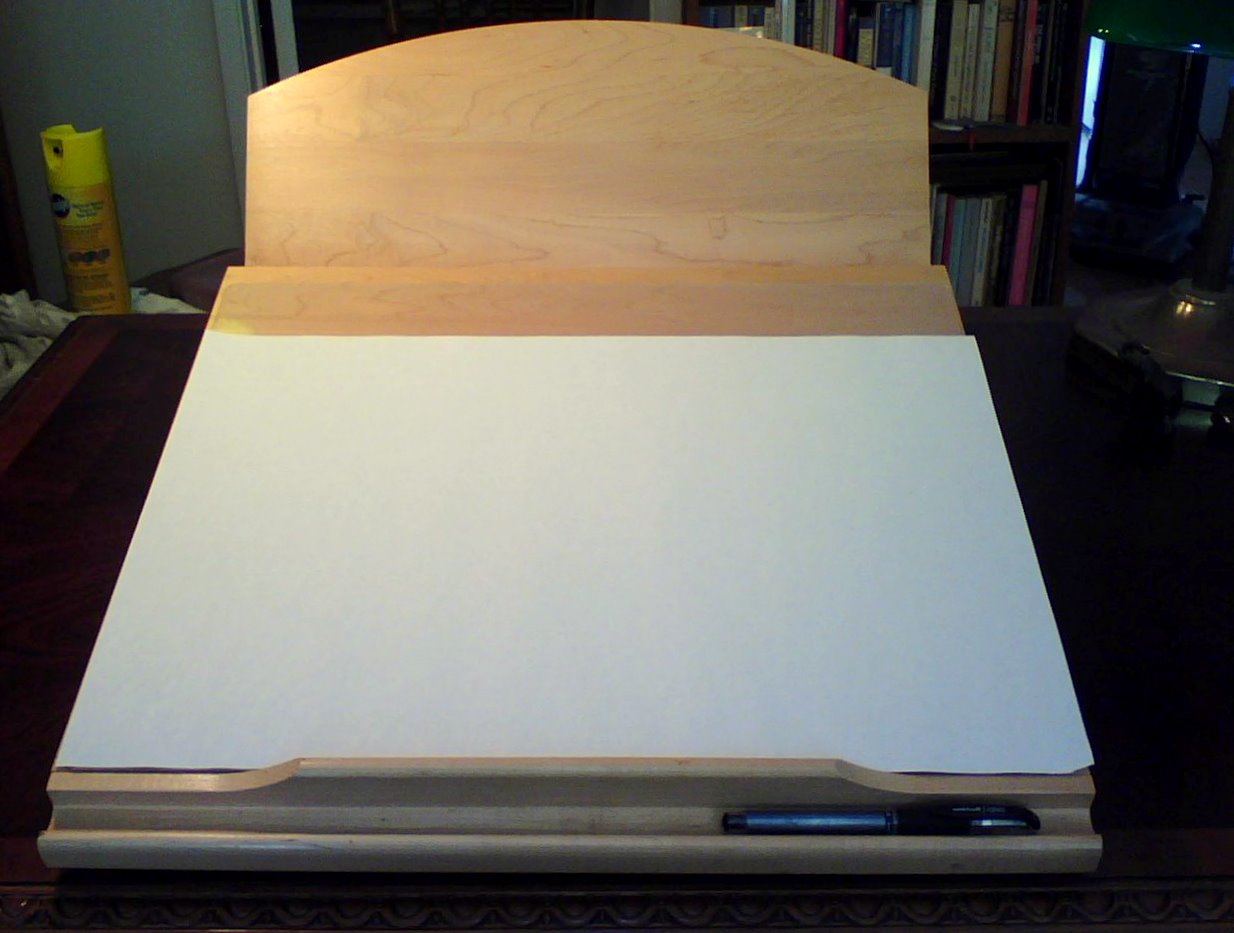
Wanna see one of the most daunting sights for a writer?

click to enlarge

Pretty scary, huh? Completely blank. Whatarya gonna do?

There was supposed to be ideation for a chapter there by now. It was in my head when I went into the other room a few minutes ago, but when I got back it was gone. Dang.

Kay Ryan

I’m reading this Newsweek.com profile of poet laureate Kay Ryan:

“Ryan has long had an ambivalent relationship with exposure, and she has always resisted change. ‘I’m eager for stasis,’ she says, ‘because I can count on its being disrupted.’ While some poets thrive on the drama of their own experience and others want to capture the cacophonous world, Ryan probes the cracks and edges in her mind. Out of those crevices, the disruptions in a quiet life, come her poems.”

Sure, I can understand that. It’s amazing how a deer among the trees remains invisible until it moves.

But the quoted paragraph seems to suggest that there are a limited number of sources in a poet’s life from which poetry springs. I say there are an infinite number of such sources in a single poem. Writing from the imagination is like holding the world up as a prism in which the light of creative inquiry might break, then watching the universe scatter into countless colored shafts. Thus, I have never read a poem the same way twice; not even my own.

missed it again

Well, I can’t believe I’ve missed another Bloomsday. My calendar reminded me, and I thought about typing something witty or at least melancholic and Joycesque. But I was OBE.

I was having an out of body experience. … No.

I was overcome by events. As some of my many faithful readers might know, we’ve been dealing with a health crisis with our beloved little Pomeranian, Happy. I’ve been posting some about her on her own blog, Happy’s Trials.

Anyway, that’s been the hungry crucible of all of my free time of late.

Here’s a quote from Mr. Joyce:

“Writing in English is the most ingenious torture ever devised for sins committed in previous lives. The English reading public explains the reason why.”

Funny, Joyce never struck me as the kind of writer who would give a wet shilling for the English reading public. But, while I’ve read many thing by Joyce, I’ve read nothing about Joyce since my college days.

Here’s a better one:

“My words in her mind: cold polished stones sinking through a quagmire.”

Yeah. Happy Bloomsday, belatedly, y’all.

work

“That’s a great deal to make one word mean,” Alice said in a thoughtful tone.

“When I make a word do a lot of work like that,” said Humpty Dumpty, “I always pay it extra.”

inspirations

When I was in college, our poetry writing professor gave us this big dose of end-of-the-year wise advice on successful writing:

Go forth and read.

Well, sure. That is actually very wise. And true. But in the years that have followed, I have come to the conclusion that it is insufficient. Here’s what I wish he had said:

Go forth and read, then go forth and fail.

I think the best thing a writer – or a musician, or any artist – can do to become better at their craft is to court failure. Embrace it, love it, give it a cold wet doggie lick in the ear. Because I have learned far more from every mincing, effete, weasel-breathed sentence that failed to thrive than I have from a dozen whole pieces that worked pretty well right off the bat. It’s good to be good, but it teaches you nothing about getting better.

As a sailboat tacks back and forth to find the wind by almost losing it, and as the pitcher gets a strike across the plate by being for a heartbeat just almost misunderstood, everything finds its way forward by making mistakes.

Gloria Steinem said, “Writing is the only thing that, when I do it, I don’t feel I should be doing something else.” I read that and I thought about a little. She felt atoned to her vocation, and right in the hours as they passed. How nice.

Here’s mine: “God help me to keep writing until I don’t feel as though I ought to be doing something else.” In other words, I’d like to feel like Steinem does, someday. … Act as if he had faith (or talent or skill) and faith shall be added unto you. … Fake it, ’til you make it. I’d like to feel like writing is the right thing to do, and not a naive self indulgence, an avoidance of real work.

So why do I feel that way? Why does anyone who is or wants to be creative so unsure, so steeped in anxious doubt that the motley rabbit is going to appear from the hat? Maybe because the life of art is in fact a naive self indulgence, an avoidance of real work. Or so They say, and we listen to Them because they might be right, and then we make the mistake of listening to ourselves relay the prophecy.

When I was up north visiting my bro, I listened to him and others play guitars and sing, and I woke up the next day wishing I had kept playing the guitar years ago. And wishing I had a guitar now. (It’s not too late, right?) Because it looks and sounds like so much fun. And when I got back home, I opened the piano and played it, and have a few times since. It’s enjoyable, and one cool thing about it is that people expect you to need time to practice. Even if you’re pretty good, you have to practice. They don’t see that writing is the same. You have to read a lot, then you have to practice for hours and hours, and much of the result, the objective product, of that practice simply sucks. But it’s OK because out of all that insufferable suckage may someday come a song … or a book.

Everybody shut up, and that includes me. My muse has a bad habit of obsequious mumbling, and I’m trying to hear her.

Thank you for your support.

a word fuse for youse

I had an idea today while walking the dog. It’s an idea for a word fuse.

As a fuse is the wick you light to cause an explosion, a word fuse is a little phrase or sentence intended to jump start writing. To prime the pump, in other words. Here’s my new one:

This is what I want to remember:

So I’m going to try it out, see how it words. You do the same, OK?

seeds

Well, here we are, another
Friday in paradise. And on
this soft and muted day
of high gray air, in which
the birds have gone to ground,
sleeping off the seeds pecked
from the good earth in yesterday’s sun,
our property taxes are due.
Dead line.
Just thought I’d bring it up,
to help you out.

Here’s a real poem now:

Rondelet
by Anonymous

I never meant
For you to go. The thing you heard
I never meant
for you to hear. The night you went
away I knew our whole absurd
sweet world had fallen with a word
I never meant.

dirt roads

This week marked the birthday of writer Flannery O’Connor, who would have been 84 if she hadn’t died quite young. We all read her work in high school and college, if we studied English at all.

O’Connor’s writing swirls around in my memory along with that of Faulkner and Harper Lee as inspiration in the Southern Gothic style of misfit heroes and mislead mystics. Such is a literature of that part of America where the roads are likely to be dirt, unlit, and walked in old shoes. If she were living, she would have to answer for being an influence on my own creative defects of character. Since she has passed to realms beyond reproach, we should forgive.

She once sent a letter to friends, along with a manuscript of her novel The Violent Bear It Away. In the letter, she wrote:

“I am 100% pure sick of it. I cannot see it any longer and the only thing I can determine about it is that nobody else would have wanted to write it but me.”

I can relate.

lawrence ferlinghetti’s birthday

The fine poet, activist, and city-enlightener turned 90 on Tuesday 3.24.09. He’s still sharp, thoughtful, wise; he can still teach, is my point. As demonstration of which, The S.F. Chronicle published an interview, which I commend to you.

Here’s a nibble:

Q: Why do you prefer the term wide-open poetry to Beat poetry?

A: I never wrote ‘Beat’ poetry. Wide-open poetry refers to what Pablo Neruda told me in Cuba in 1950 at the beginning of the Fidelista revolution: Neruda said, ‘I love your wide-open poetry.’

He was either referring to the wide-ranging content of my poetry, or, in a different mode, to the poetry of the Beats. Wide-open poetry also refers to the ‘open form’ typography of a poem on the page. (A term borrowed from the gestural painting of the Abstract Expressionists.)

Q: Can writing be taught?

A: It has to be taut.