Category Archives: stories
Lying To The Dog
If you stare long enough at that space between the trees – there, where the row of dry junipers leads the eye down to the field of baby’s breath – you begin to see water. It’s a lake, perhaps a sea, lying peaceful and cool, and not a field at all. You can hope that no one comes to cut and plough it, leave it fallow for winter.
And that’s what she sees from the window each morning, when she rises and stands alone in the quiet house.
The sun is just up, hitting the potting shed with its white window boxes, and shining on the hollow bones of the swing set rusting in the yard. There is a mourning dove on the crossarm of the power pole, cooing to himself. This has always been her favorite time of day. So calming to stand by the window, looking down at the wet grass. The dog sniffs bush to bush along the fence. She does not see him but watches the dove. Countless short and tiny lives are waking to the daylight all around.
In the kitchen, she takes the pan and the plate from the sink – where he left them before first light without rinsing the greasy leavings of egg and black pepper – and puts them in the dishwasher, setting it to rinse and hold. And hold is all she really wants to do; just to keep a grip on the life that’s casting her away with centrifugal force. And maybe she could use a rinse of sins as well; a drop of detergent for her guilt and grief. If only he could help her find such things, and stop insisting that by God he’s tried, that she’s had time to get past it, to drag her heart from the shadows; as much time as he’s had, anyway.
The dog comes in and stops to drink from his bowl beside the pantry door, then comes up behind her where she stands at the sink. She hears him coming, nails clicking on the hardwood floor. He presses his nose to the back of her knee. Ignored, he goes to his bed in the corner and lies down.
It’s true she’s had time, and he’s had time. Time has passed. But two years or two hours is all the same to her, who is always in that afternoon of their child on her bicycle, just a little big for her, with fat tires and a basket on the front – books going back to the library – riding away. Always away. So small with the trees behind her, and the gravel drive threading into the trees, to where it turns to meet the county road. That’s where she saw her daughter go, around the bend and into the trees. But she never came back out again. She was supposed to come back. That was the understanding. Come back from the library with a new book to read, to talk about. She’d suggested A Wrinkle In Time, which she had loved as a girl. Just a little time, then home; not this tearing away, this disappearing to another world.
I don’t know what do to, she tells the dog. She won’t come home. I told her, straight there, straight home. Be careful, don’t dawdle. But you know she’s followed her nose into the candy store – she can’t resist. Now why are you looking at me that way?
The dog knows. He was here and rushed the door, barking, when the officers came. They came in slowly, eyes down, holding their big hats. She shoved the dog in the hall bathroom and shut the door, and told him stay as if he had a choice. He knew at once. He could smell it on them, the pitiful sadness of it, the rough road ahead waste and shame of it. He could smell the coming grief of it; bitter, musky like a possum running down the fence. So he sat on the lime green rug on the bathroom floor and whined, and fought the urge to howl. The dog knows his lady is lying.
He should just leave us here, you know. We’d be alright, she tells the dog. My sister would come from Santa Fe and live with us. I could get a job. He doesn’t care about me and how my heart is broken. It would be good for you, too. She’s got two dogs and we have so much room, a yard that’s big enough for twenty dogs.
The dog digs with his teeth at the hair between his toes, stands and paws at his bed, then turns around and lays back down again. He’s watching her.
He doesn’t care. He only wants to leave. Just sell the house, drag up and go, he says. And how can I? You tell me that. How can a mother do such a thing? She’s much too small to be alone. The days are getting short again, and gray and cold. She’ll be hungry, tired from the ride. I have to be here when she comes.

Lying To The Dog by J. Kyle Kimberlin is licensed under a Creative Commons Attribution-Noncommercial-No Derivative Works 3.0 United States License.
your moment of zen
"Eat food, not too much, mostly plants."
~ Michael Pollan
“Before enlightenment; chop wood, carry water. After enlightenment; chop wood, carry water.”
~ Zen proverb
"If you want a certain thing, you must first be a certain person. Once you are that certain person, obtaining that certain thing will no longer be a concern of yours."
~ Zen proverb
"Now I don't know but I been told, if the horse don't pull you got to carry the load."
~ The Grateful Dead
America fades
A wonderfully astute column by Garrison Keillor.
Meanwhile, it is spring, and one has hopes for the beloved country, though an old guy like me has his doubts.
Called Away
"Every person gone has taken a stone
to hold and catch the sun. The carving
says, "Not here, but called away."
-William Stafford It really is hard to believe, but ten years ago today we slipped off our little Stella's leash for the last time and let her run on ahead, to find a good spot and wait for us. I wrote several poems for Stella, and it bothers me that they were all written in the weeks and months after she died. It seems wrong that death inspires writing in ways that life doesn't. I should write more out of love for the living, is my point.
It's and good and happy thing to remember Stella, who was such a bright light in our lives, who loved to run and play. She was very intelligent, and knew all her toys by name. But today is the anniversary of her passing. Her Rainbow Bridge Day. So here are a couple of shavings out of my novel in progress.
I wrote several poems for Stella, and it bothers me that they were all written in the weeks and months after she died. It seems wrong that death inspires writing in ways that life doesn't. I should write more out of love for the living, is my point.
It's and good and happy thing to remember Stella, who was such a bright light in our lives, who loved to run and play. She was very intelligent, and knew all her toys by name. But today is the anniversary of her passing. Her Rainbow Bridge Day. So here are a couple of shavings out of my novel in progress.
a novel in process
(c) 2010 by J. Kyle Kimberlin
all rights reserved
to hold and catch the sun. The carving
says, "Not here, but called away."
-William Stafford It really is hard to believe, but ten years ago today we slipped off our little Stella's leash for the last time and let her run on ahead, to find a good spot and wait for us.
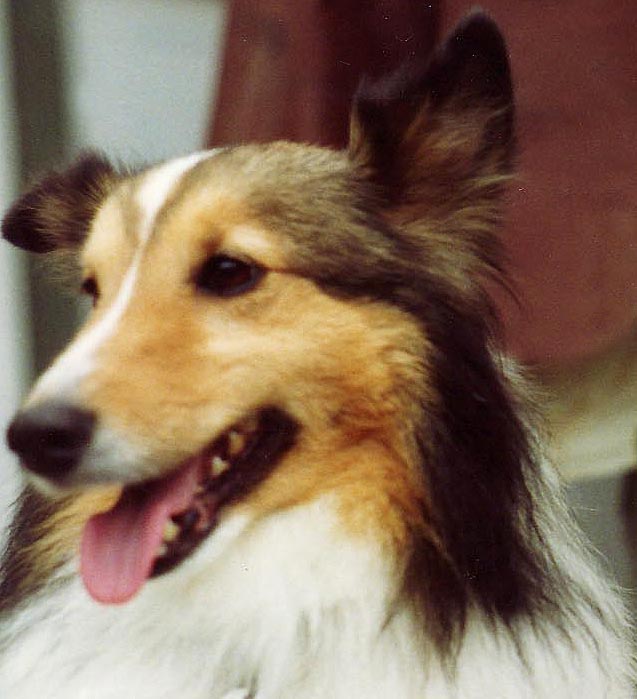 I wrote several poems for Stella, and it bothers me that they were all written in the weeks and months after she died. It seems wrong that death inspires writing in ways that life doesn't. I should write more out of love for the living, is my point.
It's and good and happy thing to remember Stella, who was such a bright light in our lives, who loved to run and play. She was very intelligent, and knew all her toys by name. But today is the anniversary of her passing. Her Rainbow Bridge Day. So here are a couple of shavings out of my novel in progress.
I wrote several poems for Stella, and it bothers me that they were all written in the weeks and months after she died. It seems wrong that death inspires writing in ways that life doesn't. I should write more out of love for the living, is my point.
It's and good and happy thing to remember Stella, who was such a bright light in our lives, who loved to run and play. She was very intelligent, and knew all her toys by name. But today is the anniversary of her passing. Her Rainbow Bridge Day. So here are a couple of shavings out of my novel in progress.
from Charlie's CrossingWe all stayed with her together until it was late, then Dad and Mama went to bed. Papa went upstairs but I could hear his rocking chair creaking overhead until much later. I did not go to bed and did not sleep at all that night. I left the light on, pulled pillows down onto the floor and laid there beside my dog. I talked to her and watched her breathe. I cried and told her about Heaven and who would be there to meet her, naming all the dogs that came before her and lived a while and went on ahead to wait, and many humans too. He told her it was OK to go, that she had done her job and completed every task and been the best best friend a boy and his brother could want. She should not worry about her family, I said. Our hearts would break, but we would be alright. And we would get along by cherishing her memory which would have to be more than enough until God sent along another dog for us.
…
I left my place on the steps and went and sat with my back against the tree, beside my friend. I decided my thinking had been terribly wrong, that I should just dispute the whole idea of dead. There was nothing about Sadie’s life and what she was – like loyal, patient, and playful – that is subject to the claims and premises of death. Even if the Church did not believe that pets have souls, that they go to Heaven when they die, I didn’t care. I had looked into the eyes of dogs and cats, horses, hamsters, enough to see that God was looking through at me. There was love in them, and God is love, so I had been taught. I thought maybe no one really dies at all, that dogs are just as alive after we think they’re dead as they ever were when we thought they were alive; that some men are just as dead when they think they are alive as they will ever be in time. But when they came with the truck and the shovels and an oval stone the width of a man’s chest, we buried her body under the tree near Apache and the others. We took turns digging, as we do, lowered the wrapped bundle on bits of rope that bore it down and down.
a novel in process
(c) 2010 by J. Kyle Kimberlin
all rights reserved
it’s always something
I wanted a perfect ending. Now I've learned, the hard way, that some poems don't rhyme, and some stories don't have a clear beginning, middle, and end. Life is about not knowing, having to change, taking the moment and making the best of it, without knowing what's going to happen next. Delicious ambiguity.
– Gilda Radner
In other words, it's a good idea to budget for inevitable emergencies.
china syndrome
The very air tingles with promise. Far and wide, all good people – those not consumed by Tiger Woods or some other surpassing disaster – are spreading the news:
The iPad is here. Hurrah! Yippee! Ole!
It's pissin' me off.
 But why? you ask. It's wonderful! It's the best thing since fitted underwear in the whole wide world!
OK, here's why. I don't think computer companies, or car companies, or toaster companies for that matter, should feel entitled to spew forth new wonderments until they by golly work the bugs, kinks, gliches, pings, knocks, hang-ups, shut-downs, speed-ups, etc., etc., out of the stuff they've already been making.
This morning, just as an abject example, I started up my 2009 HP Phenomenal X4 Pavilion computer with a compass in the stock and this thing that tells time. Normally, an excellent device. I'm telling you folks, the thing was running whacky. Nutty. Spazz-o.
Word was working, and Firefox. But when I clicked on desktop icons, the computer essentially said, "you can't touch that." The start menu and the program toolbar were non-functional. I rebooted using ctrl-alt-del, because the start menu wouldn't work. No help. I shut down with ctrl-alt-del and everything was OK. But I got to start my day with adrenaline and confusion instead of caffeine and Google News, which makes me a grumpy puppy.
Guess what! HP is coming out with a new tablet PC to compete with the iPad. You saw it here first, as far as I know.
</object>
Seriously, from one generation of technology to the next, they run full speed into spreading puddles of FAIL, and they're in such a rush to get to the next puddle, they don't even notice how muddy they are. And who's urging them on, faster and faster? We are.
This blogger thinks it's time to think more about what's useful to us on a daily basis, slow down, make it well, enjoy it, and dream a bit before we plunge.
But Kyle, why title the post China Syndrome? Well, one reason is obvious. Another is that if I'd called it Resentment Over the Obdurately Accelerating Pace of Tech Innovation, you wouldn't have read it.
But why? you ask. It's wonderful! It's the best thing since fitted underwear in the whole wide world!
OK, here's why. I don't think computer companies, or car companies, or toaster companies for that matter, should feel entitled to spew forth new wonderments until they by golly work the bugs, kinks, gliches, pings, knocks, hang-ups, shut-downs, speed-ups, etc., etc., out of the stuff they've already been making.
This morning, just as an abject example, I started up my 2009 HP Phenomenal X4 Pavilion computer with a compass in the stock and this thing that tells time. Normally, an excellent device. I'm telling you folks, the thing was running whacky. Nutty. Spazz-o.
Word was working, and Firefox. But when I clicked on desktop icons, the computer essentially said, "you can't touch that." The start menu and the program toolbar were non-functional. I rebooted using ctrl-alt-del, because the start menu wouldn't work. No help. I shut down with ctrl-alt-del and everything was OK. But I got to start my day with adrenaline and confusion instead of caffeine and Google News, which makes me a grumpy puppy.
Guess what! HP is coming out with a new tablet PC to compete with the iPad. You saw it here first, as far as I know.
</object>
Seriously, from one generation of technology to the next, they run full speed into spreading puddles of FAIL, and they're in such a rush to get to the next puddle, they don't even notice how muddy they are. And who's urging them on, faster and faster? We are.
This blogger thinks it's time to think more about what's useful to us on a daily basis, slow down, make it well, enjoy it, and dream a bit before we plunge.
But Kyle, why title the post China Syndrome? Well, one reason is obvious. Another is that if I'd called it Resentment Over the Obdurately Accelerating Pace of Tech Innovation, you wouldn't have read it.
But why? you ask. It's wonderful! It's the best thing since fitted underwear in the whole wide world!
OK, here's why. I don't think computer companies, or car companies, or toaster companies for that matter, should feel entitled to spew forth new wonderments until they by golly work the bugs, kinks, gliches, pings, knocks, hang-ups, shut-downs, speed-ups, etc., etc., out of the stuff they've already been making.
This morning, just as an abject example, I started up my 2009 HP Phenomenal X4 Pavilion computer with a compass in the stock and this thing that tells time. Normally, an excellent device. I'm telling you folks, the thing was running whacky. Nutty. Spazz-o.
Word was working, and Firefox. But when I clicked on desktop icons, the computer essentially said, "you can't touch that." The start menu and the program toolbar were non-functional. I rebooted using ctrl-alt-del, because the start menu wouldn't work. No help. I shut down with ctrl-alt-del and everything was OK. But I got to start my day with adrenaline and confusion instead of caffeine and Google News, which makes me a grumpy puppy.
Guess what! HP is coming out with a new tablet PC to compete with the iPad. You saw it here first, as far as I know.
</object>
Seriously, from one generation of technology to the next, they run full speed into spreading puddles of FAIL, and they're in such a rush to get to the next puddle, they don't even notice how muddy they are. And who's urging them on, faster and faster? We are.
This blogger thinks it's time to think more about what's useful to us on a daily basis, slow down, make it well, enjoy it, and dream a bit before we plunge.
But Kyle, why title the post China Syndrome? Well, one reason is obvious. Another is that if I'd called it Resentment Over the Obdurately Accelerating Pace of Tech Innovation, you wouldn't have read it.
Happy Easter

corningware redux
Thanks for the comments on Corningware. I haven't decided, but your input helps. Here's the paragraph I'm pondering, as it stands at the moment. The cadence needs work, and a verb in there somewhere couldn't hurt.
Setup: a man raised on a farm remembers the day of his grandfather's passing.
In the afternoon, there were church ladies in dark clothes and small colorless clouds of perfume, bearing food in Corningware dishes topped with aluminum foil, with their names discreetly etched on the bottoms, on strips of masking tape. There were sad hugs and cookies for a while, until Dad said there was something for the men to do.
“Preparations,” he said.
simplify your workday
13 small things to simplify your workday | zen habits
Some generally good ideas.
wealth
"Many writers upon the science of political economy have declared that it is the duty of a nation first to encourage the creation of wealth; and second, to
– Leland Stanford
direct and control its distribution. All such theories are delusive."
Boy, you can say that again, Leland, you old Populist.
There is something intensely ironic here, but it's a little too late on a Monday for me to put my finger on it.Howard Zinn Dies
Howard Zinn, Historian, Dies at 87 – NYTimes.com
One of a kind, unfortunately.
 Metaphor