Is the news bad for our heath and well-being? And should we – can we – give it up?
I’ve been consuming the news on a daily basis since the days of Watergate, but it has never made me feel wiser or more confident of my place in the world. The news of today’s bombing at the Boston Marathon made me feel physically anxious. Still, I feel a duty to my fellow humans on some tribal level to stay connected consciously with the bad stuff that’s happening. Is it possible to sever that connection without feeling stupid or guilty?
The Guardian says: “News is bad for your health. It leads to fear and aggression, and hinders your creativity and ability to think deeply. The solution? Stop consuming it altogether.”
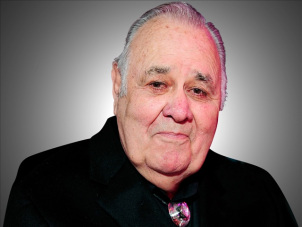
I don’t know what year it was, but my Sheltie Tasha was young, so I’d have to guess mid 1990s. We were walking on Coast Village Road in Montecito one day, and Jonathan Winters came up to us. I mean I saw him nearby, recognized him, but intended to leave him alone. That’s what I usually do when I see a celebrity: I leave them in peace. I could claim that it’s because they have a right to a personal life when they’re not working. But famous people make me nervous. Still, Jonathan Winters changed his course and walked up and started talking to me about my dog.
Tasha was exceedingly cute. But that’s not why we talked for awhile, about dogs and what a nice day it was, etc. We did because Jonathan Winters was simply an uncommonly nice guy.
My parents have a good story about meeting Winters one evening years ago, in the Carrows restaurant in Carpinteria. They struck up a conversation, he sat down at their table, with his wife, and they talked for a long time. He was so friendly and likable; not a molecule of the self-importance or conceit that it’s so easy to associate with celebrities.
Tasha and I saw Jonathan again in Montecito on another day, and we chatted again. I think I said something like, “Thank you for making us laugh.” I hope I did. Because it’s not as easy as it looks, to get that reaction. I imagine it’s something you have to be good at, without the effort that would make it false. And it’s even harder – just by being yourself – to be remembered for being openly, spontaneously gentle and friendly.
On March 31, I posted that I was back in the saddle, having experienced a significant problem with my desktop computer. I guess I should follow up and admit that I’ve been on my butt in the dust this whole time. The PC wasn’t fixed as I thought, after all.
A couple of days after replacing the hard drive, I began to experience problems starting or waking the PC when it had been off or in sleep mode for a while, It would freeze just as Windows began to start, and it might take multiple tries to boot up. Then it would run fine, until I shut down or allowed it to sleep again.
Two days ago, I pressed the power button on the tower. It lit, the computer began to hum, it went off, lit and hummed again, went off. It did this several times before I held the power button down to force shutdown. When I tried again, it booted OK.
So today the machine is in a repair shop. On the phone, the technician speculated I have a bad installation of software; a glitch in the drivers. But since the problem I described was happening well before Windows could even begin to try to load, and I had updated BIOS, I think the problem is with the motherboard.
[Sigh] The manuscript of my first chapbook was typed and mailed, and there are times when I long for the simplicity of those days. But then I wouldn’t be able to share this instantly with all of you. There is no doubt our newest technology is helpful, worth time and money to human society in general. It is bringing the world closer together. But I think the time has come for consumers to demand that people who make technology stand more firmly behind it. For at least 10 years.
The only explanation for failing hardware in a 3 year old PC is that it has a 1 year warranty. Computer companies know better than promise more, although they can make things to last when they try. The PC at the shop is a 2009 HP p6130f, quad core, 8GB of ram, 1000GB hard drive. Today I pulled from the closet a 2001 Dell Dimension 4300, 18GB hard drive, 384mb RAM. It’s 12 years old, so Dell would’ve done OK with a 10 year warranty. It runs very slowly, but it’ll get you down the road, without throwing you off in the weeds.
“If you want to be something, start being it. … not tomorrow, today.” Having a link to this video might be the next best thing to having a life coach come to your house to make sure you’re writing, painting, drawing, etc. It’s inspirational, is my point.
Well, I have my hard drive (HDD) replaced with a shiny new one, and Windows 7 installed and running. I’m almost finished installing all my favorite tools:
Scrivener for large creative projects.
WriteMonkey for writing text.
LibreOffice for professional – commercial – needs. (I haven’t decided about Microsoft Office yet.)
Dropbox.
Evernote.
Adobe Pro.
Chrome for the Web.
Miscellaneous antivirus and system tools.
I was very pleased that the OS installation took only about 20 minutes. My 2009 upgrade from Vista to 7 took at least an hour. And I remember installs of XP taking a lot longer than that. I once had to re-install 95, and it took half the night.
My first PC ran Windows 95 and the HDD was 6gb. My new disc is a terabyte – 1000gb – and I have another 1tb external drive. So here I have 333.3 times as much capacity. That’s something, huh? Progress … you gotta love it. Because we’ve all got a lot of stuff.
Ironically, I don’t think I’ll be storing much on the drive. I have about 80gb of music and podcasts I need to sync with the iPod, but everything else is in The Cloud now. I just think it’s funny that as we’re getting bigger drives for ourselves, we’re learning that keeping our files in a central location online just makes more sense.
I remarked to my family today that this might be the last monster of a desktop PC I need to have. The format of computers is changing drastically. I recently wrote a poem using Google Drive on my iPhone. I write rough drafts with my Nexus 7 pretty often now. … It’s a brave new weird.
There have been times in my life when everything seemed infused with spiritual meaning. The early 1990s had a lingering ring like cathedral bells. I felt very close to God.
I wrote his poem in 1992 and it was included in my book Finding Oakland, that year.
CLEAN MONDAY
I have decided to follow
Winter’s last storm into the ditch
beyond the wall, which becomes
a drain, a pipe to the street,
the culvert under U.S. 101.
I have been treated well
and have reached the sea
at last. Remember me
by the dark rainwater stain
down the wall of my room
and in the winds of March
that sweep the shingles
and the gutters clean.
I will come home
for Bright Week, in April
with the willow blossoms
on the altar steps
the higher altitudes of birds,
bells at midnight, the turning
of the shrouds and vestments
white. Carried inland by
the softer, warmer tides of Spring.
It’s been a dry week, both outside on our little shelf of California shoreline, and in here at the cluttered writing desk. Such times will come; they come with more frequency than the rain.
So many distractions. My desktop computer is out of service. Hard drive fail. I’ve got a new drive in it, but I’m waiting for software to arrive. Everything is backed up and I can, and often do, write and edit with this laptop. But there’s something about not doing it by choice that’s mentally irritating.
In the words of The Grateful Dead, “I don’t know but I’ve been told, that when the horse won’t pull you’ve got to carry the load.” Not exactly the inspiration that I’m looking for tonight. Instead, I’m thinking of something a friend told me once, “Trust Life.”
So to my life, or to life on life’s terms, I say:
Flatter me, and I may not believe you. Criticize me, and I may not like you. Ignore me, and I may not forgive you. Encourage me, and I will not forget you.
I’ve had Wil Wheaton’s blog in my RSS reader for quite some time, under the category of Personal Blogs. Tonight I’m moving his feed to Writers Blogs. This post is the reason.
I despise editing my own writing sometimes. And by editing I mean re-writing, and we all know that “writing is re-writing.”
I love early draft writing, to see a new thing made of words appear in the world. It has never existed before, but here it is lining up left to right, top to bottom. It’s a beautiful process, this extruding of nebulous Mind into the realm of Matter, and the occasional magic ESP that results. (We write in hopes of finding readers.) But the poor thing is going to have to by edited in due course, and that part is much different.
Sometimes there’s satisfaction in re-writing, in seeing the thing improve and go forth and live on without me. Poems are like that, and flash fiction often is. But not so much this novel that I’ve been working on for far too long.
The novel is basically written, but far from finished. I’ve got about 35 chapters, around 90,000 words. Many of the words are good ones, and in close proximity to other words whose relationships are positive and helpful. But some of the words are the wrong words, or slightly out of order. And after all this time, the effort to rectify this situation has become as dull as painting a house with a horse’s hair.
There are problems with continuity of style, voice, and perspective. I’ve written some parts first person because the protagonist felt so close to me. Other parts, third person omniscient because he is not me, and I doubt either of us would trade what troubles or consoles us.
Let’s just say I love the house, but the subtleties of color often seem insurmountable.
The signs out on the county road and on the side of his barn say Pony Rides, but they’re not really ponies. What you have here are donkeys. Most of the kids don’t know the difference. The grown-ups don’t care, so long as the kids are happy. So he can stand on the porch overlooking the barnyard, watching the sun glint off his old windmill, knowing the distinction is pertinent only to God. He is a man without pride, in the midst of humble beasts.
Today he feels tired and sore, like the hot shower wasn’t enough to wake him up and warm his bones. The mug of coffee he grips in both hands is warming them, but as he drinks it in loud slurps, the rest of him aches for the sun to get up and get busy. The damned thing is dawdling in the tops of the cottonwoods, no help at all to a man with things to do.
In the kitchen, he rinses his cup and sets it in the sink. He takes the teaspoon from the counter near the coffeemaker and drops it in the cup, so that it won’t slide down into the disposal and get beat all to hell. These little things matter now. His wife ordered their silverware years ago, from a catalog. Now that she is gone and he is old, he means the set to last the rest of his life. He will buy no more spoons or dishes, towels, sheets, doormats, wallpaper. He is finished with the replacement of things that have any hope of lasting; he buys nothing for the sake of something new.
The radio on the shelf above his spice rack – salt and pepper, basil and thyme – says the day will be sunny with wind soft from the east. The radio was hers as well, redeemed from the Green Stamp Store, years and years ago. It’s held up better than any of their cars. Some things do.
Out in the barn he follows his shadow as it falls ahead of him — cast by sunrise slanting through the big doors — down between the stalls where a dozen animals are awake and waiting. They’re hungry and he feeds them. He always wonders why they are happy with the same food every day. They’re happy to see him too, as he speaks to them, calls each one by name, and rubs their ears as they bend to eat.
In the last two stalls are Sweetpea and Louie, a mare and her colt. Sweetpea has carried the children for years, turning in her circle slow and patient, with love for her burden. Laughter settles on her back like sunlight. But at night she dreams of a field. The grass is green and the man is not there.
He needs to train Louie to walk in a circle steady and calm, to carry children carefully. These animals are bred for the work, but no one has ridden this colt yet. Louie is the only thing new on his place, the one concession to legacy and the years that roll on beyond the trees that border his land.
He opens the gates to the paddock and corral, and lets the animals out of the barn to play in the sun and drink from their trough. He mucks their stalls, spreads fresh hay, and takes the long training lead out to tether the colt to the center pole.
“You and this pole might as well get acquainted now as later. Don’t let it spook you, boy. Soon enough, it’s like the whole world turns in this barnyard. But it’s not a bad life, I think.”
He fills again the cup he left waiting in the sink. He stands drinking his coffee, with cream and sugar, watching Louie test the limits of the rope. Then two men come walking through the gate and up the path from the road. He sets the cup on the porch rail and hurries down from the house, as they enter the corral and untie Louie from the post.
“Hey now, what do you men suppose you’re doing with my donkey there?”
They look up at him. The sun is fully in the barnyard now and one man says, “The Lord has need of him.”
Soon the sun is full and bright, and the man and his animals are warm in the spring air. Sweetpea takes some consolation in his petting of her long ears and stroking of her neck.
“He’ll be back,” he tells her, and the old windmill shudders and turns in the breeze that was promised.


 Metaphor