A little funny for your weekend.
Your World
However your world is viewed, it must be your own … Only through a vigorous exactitude of presentation can the essential strangeness of life be conveyed … You’ll never be able to write a novel as long as you have the illusion that … the world you know is too dull and commonplace.
– John Braine
Writing a Novel (1974)
Love and Time
So a few days ago I was listening to the audiobook version of Thirteen Moons by Charles Frazier. What a beautiful thing. It begins:
There is no scatheless rapture. Love and time put me in this condition. I’m leaving soon for the Nightland, where all the ghosts of men and animals yearn to travel. We’re called to it. I feel it pulling at me, same as everyone else. It is the last unmapped country, and a dark way getting there. A sorrowful path. And maybe not exactly Paradise at the end.
Now I’m not evangelizing that character’s metaphysic. But I felt called to make my own uphill assault on that word, Nightland, and see what words might appear. So let that serve as epigraph, is my point.
Nightland
When we are alive, everything is easy.
Hair can be touched with fingers
that have learned about thorns
and roses have a scent that the mind
isn’t forced to imagine. Clouds appear
and pass slowly, so we only need to look.
In life — Dear God — there are oranges,
rivers, violins, and hours just
waiting for the bread to rise.
In the Nightland, years go by
in a struggle just to remember
these gifts. There is no fruit
no sense of taste, no gentle breeze to bring
the clouds toward us from the sea.
We spend a century imagining
brown hair tucked behind a girl’s ear,
then go on dreaming of papers
tacked to a crumbling wall.
Because now we are merely dreams
that never end but are always fading,
slowly forgetting the living world.
Kyle Kimberlin
March 5, 2014

Nightland by Kyle Kimberlin is licensed
under a Creative Commons Attribution-
NonCommercial-NoDerivatives 4.0 International License.
sparrow
Don’t Hate Math
I didn’t take any math courses in college. It wasn’t required because I managed somehow to pass the basics in high school. I was relieved; I wasn’t good at math. But I didn’t hate it. A lot of people do, and I understand.
Here Edward Frenkel exhorts us to be curious about math, not to hate it, because human life is abstract and becoming more so. And math, he says, is the key to abstraction.
Funny. I would have said the key to abstraction is poetry. But that’s why I write and don’t do math. Still, he’s right about curiosity: tolerance for all manner of thought is essential to freedom and happiness.
Happy Birthday, Bro
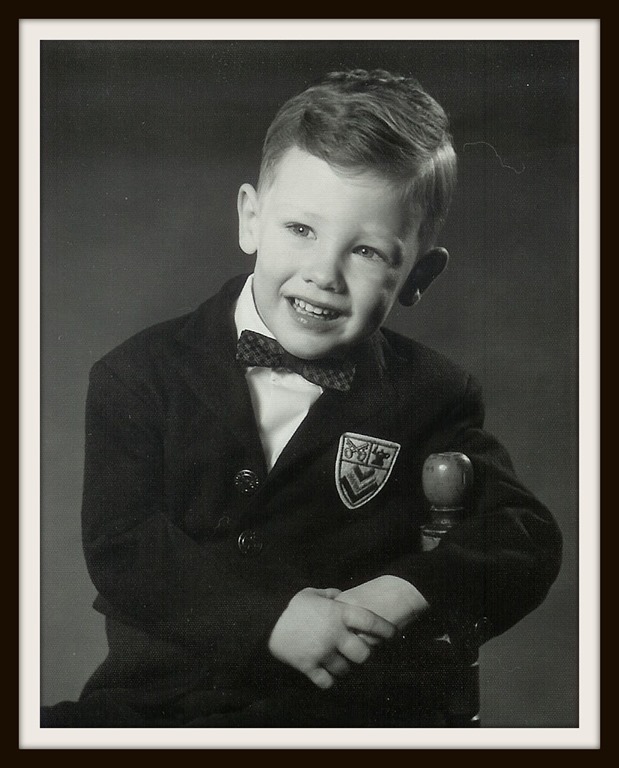
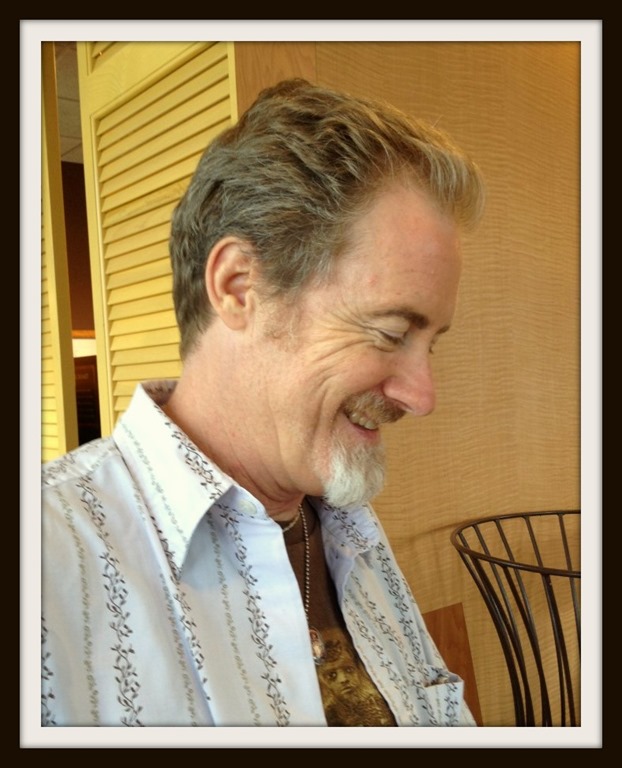
Sending birthday hugs to the best brother a guy could wish for. And a poem.
SHINE
Such a lovely autumn.
We have the orchards
and stars
when the clouds are parted;
the stars we pass to
each other
hand to hand,
as if they were warm.
Stars in my mother’s arms,
brother’s eyes, father’s
voice and resting on
the painted water where I
sleep; shining through
the music of my life:
the adagio of any day at dawn.
Stars, eyes, eyelids
shut against the heat
and stroke of time,
smoke and death,
or just the sea
and its terrible salt.
Stars melt, years pass,
as magic lanterns
reflect the firmament
of stars in an endless row
of nights; weeping, shining
in the orbits of our days.
Shine by Kyle Kimberlin
is Creative Commons Licensed.
I don’t see any…
Quote
I don’t see any difference between fiction and non fiction because it seems to me that the real is very much an imagined thing, and the imagination can become just as real as anything else.
Colum McCann
Heard on a podcast and scribbled down furiously.
A Terrible Thing

The Angel
It is a terrible thing to run dry, to be a man
caught out in the open under the great arcs
of light and darkness. In such places,
nothing but thirst will remind you of human desire;
nothing but the thought of God will recall your name.
I don’t know it. I can’t say where you came from
or where you dreamed you might be tomorrow.
I know only this step and not another.
The next step and none after that.
Turning back brings no more hope than pressing on.
There is no water here.
I don’t know why you came at all.
The Crow
I have a beautiful song for you, don’t you understand?
No. You hear only Caw and Caw Caw, but that’s because
you don’t have ears. No fault of mine!
I can sing, fly, hop on the ground in the sun,
and tear apart those who have died.
My kind keeps things cleared away, and the song we have
is lovely because it knows the secret moments of a day.
The song contains time, and you can’t even take that
in your hands. It skips away and flutters, then it soars.
The Tree
I have my ally: The wind comes to find me,
flying for a thousand miles. We are in love
but the wind cannot stay.
The rain when it comes feels wonderful to me.
There is so much to love in my world.
I believe I love the water most of all.
Everything wants to touch me, to hold and caress
and I feel strong. I reach up for God and He is there.
We die as we live, silently and in peace.
Even in death we do not fall, but wait for the wind
to circle round the world again and ease us down.
So I am not afraid of you.
The Dog
My life is a dance of ten or fifteen years, and I love
to hear my voice ring out into the all-too-silent world.
You can say so much with your silence, like the wind,
but a dog is a turning leaf and a sound.
There is a long river of light when the day gets old
and I grow tired, thinking of my food and where I sleep.
I am not afraid because the pack is with me.
I do not rest alone.
But you will, Man, and it makes me sad.
I have seen our tracks in the dust up ahead,
where they go from many to few, to two then one.
Mine don’t go on very long, but I have no words to tell you this.
The Angel
I could bring you thunder and rain without warning,
to rise and rush high in the scarred earth
and sate the dying filigree of trees.
But you would never ask Heaven for that.
Kyle Kimberlin
2014.01.25

A Terrible Thing by Kyle Kimberlin is licensed
under a Creative Commons Attribution-
NonCommercial-NoDerivatives 4.0 International License.
Poet Laureate of Arizona
Do you know who Arizona’s Poet Laureate is? No, me neither. They just inaugurated their first one this month. Based on reading this interview, it seems they have chosen wisely.
At Year’s End Again
I posted this poem on 12.30.2013, then did a substantial re-write.
Better? Less obscure?
At Year’s End
I had one task, to testify, to bear witness
to the love of life and the itch toward death.
In my hesitant quest for words
and their order, there there must be something
I have overlooked. I still don’t understand.
The tree beyond this window is threadbare,
Tattered by the wind and rain.
But when the sun was high
and bright at the end of June,
it wore a great coat of summer leaves.
Our faces are deeply lined now, hair
variegated gray.
We heave from the chair with a groan.
We stand and talk while dogs dance
around us in sparks of happiness.
Then why do we turn to the east in December
and putting the last of the light to our backs,
why do we lie down and sleep?
At Year’s End by Kyle Kimberlin is licensed
under a Creative Commons Attribution-
NonCommercial-NoDerivatives 4.0 International License.
A Resolution for the Disease
“Writing is not a career, it’s a disease. It’s something that you’re going to be doing whether you’re lucky enough to be paid for it or not. So if you have that disease–and you know if you do–if you have that disease, you don’t have to listen to people who tell you no.”*
– Dara Horn
It’s a strange sort of disease. The only way to prevent it from hurting you is to embrace it, become complicit in its process, and let it do its worst. If you ignore it, deny it, or worse if you try to treat it, then you suffer.
I haven’t been writing much lately and it doesn’t feel good. It’s because of the holidays, and short days full of busyness and long nights full of sleepiness, and because it feels like Inspiration is keeping her distance. I know she’s out there, crouching in the scrub brush on the bluffs or leaning against a trunk among the avocado trees, watching me. I need her to come here, into the lights and warmth of my comfort zone, but she doesn’t care. Inspiration has all the time in the world and couldn’t care less if my time runs out before I write another word.
Figments of our imagination don’t work for us, we work for them. Inspiration shows up when we’re working. And if we don’t want to do the job, they’ll find somebody else.
Bummer, huh?
I have heard it from hundreds of writers and teachers, all of my adult life, and our college poetry professor also told us this: If you want to write, read a lot. And write every day.
Every day. Nobody ever says frequently, or almost every day. They always say every day. So here’s my one and only New Years resolution: Every day, read, write, pray. I believe if I can do this, I’ll be happier and clearer-headed. And other things I ought to accomplish will more readily fall into place.
If you have something that works for you, or that you plan to try, please leave a comment.
Happy New Year!
* I heard Dara Horn say this in the Writers on Writing podcast from KUCI. Here’s a shortlink: http://goo.gl/bsGfP1
At Year’s End
I have failed at my task.
My job is to testify, to bear
witness to the love of life
and the itch toward death.
My hesitant quest
is for words and their order.
But there there must be something
I have overlooked. I never learned
the cause of anything.
The tree beyond this window
is threadbare, tattered
by the wind and rain.
But when the sun was high
and bright on the last day of June,
it wore a great coat of summer leaves.
Our faces are deeply lined now,
hair variegated gray. We heave
from the chair with a groan.
We rise and work and let our dogs
dance around us in sparks of happiness.
At last, the mystery: we turn
to the east, lie down and sleep.
At Year’s End by Kyle Kimberlin is licensed
under a Creative Commons Attribution-
NonCommercial-NoDerivatives 4.0 International License.
 Metaphor