Analog Abides

“My memory is certainly in my hands.
I can remember things only if
I have a pencil and I can write with it…”
– Rebecca West

I used to write a lot of posts on this blog about writing tools: office suites, word processing software, low-distraction text editors, note-taking apps, etc. This is going to be like that but very different, because analog abides.

I’m writing this post in a Moleskine notebook that I bought in 2011. It has ivory paper and a smooth hard black cover. It has held up well and been appreciated, humble as it is. I’m writing with a General’s Cedar Pointe #333 HB pencil, a natural wood tool made in the USA of sustainable California incense cedar. Natural means that unlike most pencils, it’s not painted. It has a cool black ferrule and a black eraser.

My choice of writing implements means that no app needs to be launched, though either the notebook or the pencil could be launched, if I were provoked. No batteries are involved, no lights are shining in my eyes, and I can depend on these devices not to suddenly beep at me.

Analog is not dead. My journey to this revelation began last summer. I was furiously plowing through an array of productivity apps, trying to find the best way to get a grip on everything I have to do for my job, my home, writing life, etc. This had been going on intermittently for years. I would routinely decide that whatever system I was using wasn’t working; it didn’t really fit my needs. I believe I’ve tried every to do and project management app offered in a free version before 2017, usually in combinations of task manager (e.g., Producteev, Any.do, etc.), note-taker (Evernote, OneNote, Google Keep), and calendar (Google). I was frustrated but I was completely immersed in the digital realms and looked there for all solutions.

I’m not exaggerating that digtial immersion. After nearly a quarter century of daily computer use, I had begun dreaming in computers. Not dreaming of being a human using a computer; I dreamt of nothing but what was within the frame of the monitor, within the functions of the program. I thought that was pretty twisted but went on searching for the best digital tools.

My search for productivity options led to YouTube videos and blog posts, mostly about the latest updates or the best tips and tricks for all those applications I’d been trying and hating forever. One night I watched a video about the Bullet Journal method, using a paper notebook to plan and track tasks, events, etc. I learned that people all over the world use variations of this method, some minimalist, others extravagant and artistic, employing a variety of notebooks.

I decided to give it a try, but opted not to buy one of the trendy or popular brands like the German Leuchtturm 1917, or the French Rhodia. Not my style. One thing I already knew was that anything too precious doesn’t get used up, it gets pampered. (Like my 7 year old Moleskine). So I ordered an AmazonBasics notebook, simple black hardcover, with good enough paper, for $8.99. I have continued to buy them. I keep my notes and tasks list in these basic lined notebooks, I work in the computer without living in it as much, and I’m less aggravated. I don’t dream computing anymore.

In October I decided to apply my new love of notebooks to my personal journal. I stopped failing to keep a journal on computer and started really journaling – a lot – with one of those Amazon notebooks. They’re 240 pages and I’m well into my third one. After Christmas, I discovered Field Notes, simple but awesome little pocket notebooks made in the USA. More about them in a future post.

Until the Ides of March, I wrote in my notebooks exclusively with pens; mostly my favorite pen, the Pilot G2 gel pen, black .07mm. I hadn’t used pencils for many years. Then one day in March, I happened upon a box of Dixon Ticonderoga pencils in a drawer. Just for fun, I sharpened and tried a couple of the Ticonderogas and decided they write too light. (Remember I was used to heavy black ink.) I did some googling and learned that my box was made in the USA and pre-dates the millennium. Dixon has made pencils in China and Mexico since 2000.  In fact, I used to brief cases for law school in pencil, and these probably survive from that time, the mid-1980s.

I soon discovered that pencils are interesting – their history, manufacturing – they’re fun to write with, they feel right to the mind. They’re (mostly) surprisingly inexpensive. A box of pencils for the price of a coffee or two. They’re tactile, organic, and real. I have been learning, and become an enthusiast for pencils. I found there are podcasts and blogs, countless YouTube video reviews, and social media groups of people whose hobby centers on pencils, pens, and notebooks. There are worse things to be enthusiastic about, especially in these bleak days of the rise of fascism, resurgence of racism, and The Great American Stupid. But I digress.

I’ve learned something about myself through this process; something more important than the fact that I was a little too dependent on technology to meet all of my everyday needs. I learned something about my personality.

I am a very tactile person. I value the inner life of the creative mind and enter the world by writing about it, but I find the sense of touch in outer life profound and essential. And in these times of extreme sensory overload, of sights and sounds that can in no sense be called real, the tactile sense can be a soothing touchstone for consciousness and Being, and a consolation in mundane life. It can even be an antidote to the psychological impacts of digital burnout.

The quilt presently and often on my bed was made for me by my grandmother. She gave it to me for Christmas 2000, and she passed away in 2004. Sometimes when I get into bed I’ll run my hand over it for a moment and believe that I have been loved, I am loved, I share love in this hysterical and sometimes demoralizing world.

I like the feeling of touching cloth, leather, and wood. I love the feeling of warm water in the shower. The feeling of a warm cup of coffee in my hands is nice. I enjoy the textures of paper, copper, and stone. I have 2 small polished stones on my desk, both imbued with thoughts of people I love. I pick them up and hold them sometimes.

Organic and tactile, pencil and paper have become the imperative first step in my creative process. Always, my favorite thing to touch is a dog. Happiness, Charles Schultz said, is a warm puppy.

Antonio Machado wrote:

“All over I have seen
caravans of sadness,
pompous and melancholy men
drunk with black shadows.”

The meaning of life is found in the life being lived and it’s a process of self-discovery. A deep life is a good life. But it’s not easy. We live in a destitute time, what Heidegger would have called “the world’s night.” So it’s incumbent upon each of us to find what consoles and inspires us and hold fast: the music that gives us joy, the distant tree that defies the lowering sky, the words that we know to be true, the faces and memories that we recognize and love. And write those things down.

~~~~~~~~~~~~~~~

Pencil Notes:

In writing this post, rather than sharpening one, I used the following pencils:

General’s Cedar Pointe #333 HB pencil. It’s a favorite because of the natural finish, which feels good in the hand. I got a dozen from Amazon for $6.94.

Palomino Golden Bear, made in Stockton CA. Possibly my #1 favorite. It’s blue with gold imprinting, with a silver ferrule and a white eraser. It’s a little darker than the Cedar Point, writes smooth. $3 for a dozen from pencils.com. That’s 25 cents each and it’s a good pencil.

Mitsubishi 9850 HB General Writing pencil, a beautiful deep maroon thing with gold lettering. Made in Japan. Japanese pencils are generally considered excellent; it’s very smooth. It’s the most expensive I have at $8.90 for a dozen from Amazon.

PaperMate Miardo Black Warrior, a round pencil with flat black finish. It writes dark and is a great pencil for the price. It was a total impulse buy in a drug store, about $2 for the package of 8.

It’s important to buy pencils made of sustainable wood sourced from managed forests.
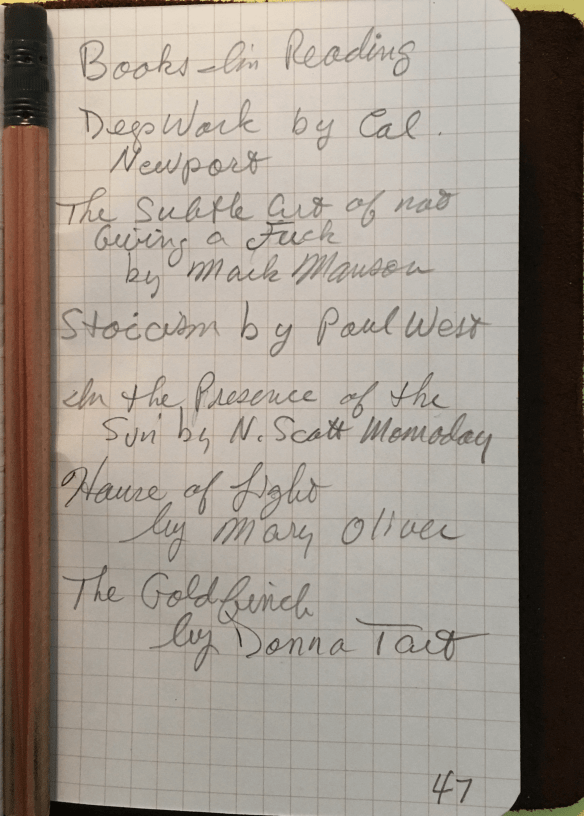


Books I’m Reading

2018-05-05 16.06.15


I forgot to list Thanks, Obama by David Litt because it’s a real paper book; I got it for Christmas.

Speaking of real paper, that’s some of mine there. Field Notes Khaki Graph, Cedar Pointe natural wood pencil. More about my love for analog in an upcoming post.

Don’t Read Poetry

I am a poet. When I forget that, I wander off into thickets of entropy. I think about poetry, often and a lot, and I think maybe you should not read it. I mean you should do something else with it. Because reading poetry can lead to thickets of attempted comprehension, and poetry isn’t about comprehension. Poetry isn’t just about top to bottom, left to right. Metaphor is not the same as enigma or secret code. It’s certainly not about that Robert Caro quote perhaps you know, “The only thing that matters is on the page.” That’s true, but it means something else.

The essential thing that makes poetry work, if and when it does, is not on the page at all. It’s in the reader’s mind. It’s waiting in the mind for a poem to appear, or a phrase of music, or a smell of food cooking, or a moment’s image of people from a car window. It’s not an understanding, it’s a recognition, a resonance. It is at best a meeting of minds across time and space.

“I think there is a general misconception that you write poems because you “have something to say.” I think, actually, that you write poems because you have something echoing around in the bone-dome of your skull that you cannot say. Poetry allows us to hold many related tangential notions in very close orbit around each other at the same time. The “unsayable” thing at the center of the poem becomes visible to the poet and reader in the same way that dark matter becomes visible to the astrophysicist. You can’t see it, but by measure of its effect on the visible, it can become so precise a silhouette you can almost know it.”– Rebecca Lindenberg

So I suggest do you not read poetry. Listen to it. Pick it up and hold it like something that belonged to someone you love, or something they made for you, and run your hand over it. If you can’t do that, swallow it hole and let it swim around inside you like a fish.
Whatever you do, never ask a poet what a poem means. It means the taste of that cake your mother made for your birthday. It means the cold fog rolling in.

Memory Fades


“Time passes. Memory fades, memory adjusts,
memory conforms to what we think we remember.”
― Joan Didion, Blue Nights


So many things I believe I remember.
Like a walk in the forest, the stellar jays,
chipmunks, the sound of a stream.
Like standing in a cold city rain, wondering
how life would go for me when
I was older, when I had the means;
tilting my head back and letting it come.
Like lying on the floor with an old dog
and crying, helpless, the Nightland
pressed to the windowpanes, learning
that time falls away like a waterfall.
Like spending a night alone searching
memory for symbols of meaning
in late summer of a life that eludes
meaning, eludes flowers and wine,
and has settled like mud
into a comfortable bed of memories.
Like not loving you enough.
Like waking up after you were gone.
Oh God, I have slept through my life.


J. Kyle Kimberlin
Creative Commons Licensed

What I Am

“And this I believe: that the free, exploring mind of the individual human is the most valuable thing in the world. And this I would fight for: the freedom of the mind to take any direction it wishes, undirected. And this I must fight against: any idea, religion, or government which limits or destroys the individual. This is what I am and what I am about.”

― John Steinbeck, East of Eden

The End is Never Told

A writer out of loneliness is trying to communicate like a distant star sending signals. He isn’t telling or teaching or ordering. Rather he seeks to establish a relationship of meaning, of feeling, of observing. We are lonesome animals. We spend all life trying to be less lonesome. One of our ancient methods is to tell a story begging the listener to say—and to feel— “Yes, that’s the way it is, or at least that’s the way I feel it. You’re not as alone as you thought.” Of course a writer rearranges life, shortens time intervals, sharpens events, and devises beginnings, middles and ends. We do have curtains—in a day, morning, noon and night, in a man, birth, growth and death.
These are curtain rise and curtain fall, but the story goes on and nothing finishes.
To finish is sadness to a writer—a little death. He puts the last word down and it is done. But it isn’t really done. The story goes on and leaves the writer behind, for no story is ever done.
– John Steinbeck


The storyteller makes no choice
soon you will not hear his voice
his job is to shed light
and not to master

Since the end is never told
we pay the teller off in gold
in hopes he will come back
but he cannot be bought or sold

– The Grateful Dead, Terrapin Station

So We Believe

Some nights we go to bed sad.
All the lights dim across America,
all the sparklers dipped in a midnight
kind of pain that puts them out.
Then all night it’s cold in the mountains
and across the great desolate land,
a blue wind coming down from high
places, from snow, through aspen
and pine, and it’s hard to sleep.

In the morning there is dove light
again, dishwater clouds.
The traffic moves, dogs bark,
the people rise and fling themselves
into argument – the great debate
of right and wrong – as children
go to school and probably survive.
So we believe there is a God
and it’s not us.


J. Kyle Kimberlin
Creative Commons Licensed

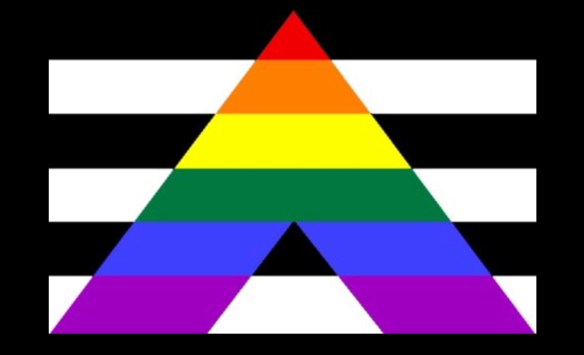
Straight Ally

straight ally symbol

“A heterosexual and cisgender person who supports equal civil rights, gender equality, LGBT social movements, and challenges homophobia, biphobia, and transphobia.”

When I was in college in the mid 1980s, I was pre-law. I was put in charge of an internship program that was part of a free legal clinic. I was director with a small staff of interns and one of my duties was to recruit new interns. One day I was talking to one a young woman in my program about groups I could visit on campus, to speak about recruitment. She suggested the Gay and Lesbian Student Union. I said I didn’t know if I would be comfortable with that group. She said, “you don’t have any trouble being comfortable with me.” Yeah, I had no idea. Should I have? She hadn’t told me, but is it something of which I should have been intuitively cognizant? No, but that’s not the best question.

A better question is whether I would have treated her differently if I had known. I hope not and I seriously doubt it, but had just admitted to her that in my own mind, I had an issue with gay and lesbian people. They made me uncomfortable, in some way that I’m not sure I could have qualified.

Society’s attitudes were different then. It was in 1984 and I was only 23. I came from a small town with few, if any openly gay people. The Moral Majority was telling American that gay equaled AIDS, while the Reagan administration was busy not helping. So I was given a teachable moment, from which I took away, at the time, the certainty that I had a lot to learn about people and our lives together. But very little idea where or from whom I would learn it. So I promptly, conveniently, forgot about it.

In my 30s I joined what could unarguably be called one of the most conservative churches on the planet. I don’t mean purblind tight-ass, sanctimonious American conservative. (No offense.) I mean Orthodox Christian, the old church, the old calendar, liturgy in Slavonic. I didn’t go there looking for conservativism. I went looking for communion with God. And nobody there was saying anything political; no preaching against gay marriage or anything. I was just vaguely aware of the church’s stand on such matters, that homosexuality is sin.

The Orthodox Christian Church is beautiful in many ways; mystical, ancient and eastern. Completely insulated from American politics, in my experience. Conservative to the point of believing that righteous government is wielded by a God-anointed Czar. No matter how conservative you think American “Christians,” of the kind that can follow Trump and Pence, can act, they are still very liberal and humanist compared to some people I have met.

There were a few points of doctrine that I had a problem with. I believe that pets go to Heaven. I don’t believe that homosexuality is a sin. I believe that sins are acts that separate the sinner from God and arise from our own selfishness, not from states of being. Sins are not acts that piss off other people; nobody has the right to tell you what your sins are. And certainly love can never be a sin. Acts that piss off other people are called pet peeves and crimes, which is why it’s imperative that we prevent tight-ass people from legislating their sins into our criminal legal codes. I believe that whatever your church chooses to practice, the law of the land is equal protection of the law for everyone.

There I was, though, in that beautiful church with those kind and gentle people. In my 30s, my opinion about gay rights was that people should keep their private lives private and stop demanding that the rest of us endorse their proclivities. I think that’s exactly what  I would have said at the time. And of course, I was completely missing the point. I had more learning to do.

When I visited family in San Francisco in the 1990s, someone suggested we go to the annual Pride parade. I recoiled at the idea, partly because I wanted to go to Marin County, enjoy some peace and quiet and relax. There’s a place, or was, in Occidental, that makes some pretty damn fine waffles. Also I was a good Christian with no desire to watch people cavorting in the streets. It seemed to me that sexual and gender identity wasn’t a reason for a demonstration in public. After all, heterosexual people don’t do it. It didn’t occur to me that hetero people should be glad they don’t have a reason to demonstrate.

Two more decades have passed. I’ve made gay friends, transgender friends, I have a transgender loved one, and I have learned that not only was I wrong about LGBTQ people, I was wrong about the culture in which we live. “In the world there is, parallel to the force of death and constraint, an enormous force of persuasion that is called culture.”[i] That culture had persuaded me to think that some of us were normal, others not, and that I was being cool by saying that normal people should tolerate others – live and let live – and the others should fade into the background noise and be tolerated.

Culture wields power. Power is inherently paranoid and potentially destructive. “When somebody goes outside the cultural norms, the culture has to protect itself.”[ii] So the LGBTQ movement is cultural self-defense, not an uprising to overthrow the culture norms, though that may be necessary and may come at great cost. None of which would be quite so obvious to me if not for the great homophobic backlash of the Trump de-evolution.

Before Trump made America hate again, civil rights seemed to be improving. Ferguson notwithstanding, I was more relaxed. I didn’t feel like the rights and wellbeing of people I care about were in jeopardy from the society I life in. Things have gone very much awry and as always the issues of civil rights for LGBTQ persons are no less fundamental and compelling than those of persons of color. They are the issues of us all. And I’m forced to admit that my opinion of 20 years ago was really a subtle form of self-righteous apartheid.

A few things are clearer now than they were in the halcyon days of Obama: First, that a reformation is necessary to secure the blessings liberty to those whose civil rights are every bit as morally imperative as those of hetero and gisgender people like me. The reformation must profoundly change this culture. Second, the culture has it coming, by God. Third, people like me have a moral duty to take sides and speak out, and the reformation will go better for everyone if we do. “Normal is just the average of deviance;” it doesn’t exist.[iii] All life is a spectrum, and if people like Trump and Pence, and the alt-right zombie army they’re building are normal, I want no part of their part of the culture.

I’m not suggesting that churches should be required to perform gay weddings. I’m as much for freedom of religion as freedom from religion. I’m saying the right to marry is a civil right and the government should make no law prohibiting its free exercise. I’m saying that no religion or cult should have the power to legislate its creed and impose its beliefs on anyone who doesn’t freely accept that creed. This culture has been poisoned by fear and tied back to to dogmas of fear, prejudice, protectionism, and doublethink. A reformation of compassion and unequivocal inclusion will do us all a world of good.

I said that after college, I had a lot to learn. I think it’s ironic that I learned as much from the people who hate people who are different than from people who in the crosshairs of that hatred. Fascists never seem to realize that hatred and paranoia (homophobia, biphobia, and transphobia) sow the seeds of their own destruction. Even bystanders can watch bullying for just so long. Now I wish I knew then what I know now, and I wish I knew now what I don’t know yet. “All kinds of sadness I’ve left behind me. Many’s the day when I have done wrong.”[iv] But I know that everyone deserves respect and equality. Our law demands it. And while any person doesn’t have equality, no person who does should go quietly or rest easily.

pooh piglet wind

[i] Albert Camus.

[ii] Robert Pirsig.

[iii] Rita Mae Brown

[iv] Jethro Tull

J. Kyle Kimberlin
Creative Commons Licensed

Happy Easter

I gave myself a few nice little presents for Easter this year, each one better than the ears off a chocolate bunny. Let me tell you about them because they might inspire similar gifts you could give yourself, and it doesn’t have to be a holiday.

First, I gave myself 30 days off Facebook. I’ve been thinking about it for a while and when I got up this morning and saw atheist trolls bullying Christianity on Easter, I knew it was the perfect day. I’ve always said that the bug that allows Facebook users to see what their friends are “liking” and commenting on elsewhere, even if their friends don’t actually share it, is a bad bug. Well, an old friend of mine was commenting on atheist pages, which caused me to be able to see these horrible things. It was bad. Stupid blasphemy in my feed. The only thing worse is when religious people try to force others to practice their religion.

So I activated an app in my PC that will block me from logging on to Facebook until noon on May 1. And I deleted the app from my phone. I’m out for the first time in 9 years. Feels better already.

Second, I wrote a poem for Easter. Here it is. This poem is for my Mom and Dad.

SUNRISE

The universe is confusing.
I’m trying to see the next right thing
and light goes off on a tangent.
Then there’s paradox: Truth
is always two things or many things
all real, all believable
or nothing all at once.

Why is there so much water
all around and so many things
that can’t breathe it? Why haven’t
dogs learned to talk yet?
What is Time, falling and flowing
and standing in puddles that reflect
the face of an infinite grief?

How could God make something
so soft and weak and full
of wet fragility and selfish hope,
so many of us all alike, then
love each and every one unto
death and into Eternity?

Look, there comes sunrise now
and flowers, spring sempiternal
as the planet spins, dragged
through the void by a star
fleeing everything, bound for nowhere.
We ought to be grateful for the ride,
whatever we are, born on our way
to somewhere else.

J. Kyle Kimberlin
Creative Commons Licensed

Third, I used part of my Easter free time to draw a picture of a tree. I haven’t tried to draw a tree since art class in junior high school, in 1974. But I remember I liked doing it. I remember the art teacher, Mr. Hinton, came to my piano recital. Which was a pretty damn nice thing for a teacher to do in his free time. Nice guy.

It’s a humble tree- it’s bottom-heavy and it needs a lot more leaves – but not terrible for the first try in 44 years. I enjoyed it so I’ll probably do it again and get better at it, right? Just like with writing, practice makes possible. And if at first you don’t succeed, skydiving probably isn’t for you.

Tree 2018-04-01 14.34a

Christ is Risen.


Time Passing

What is the poetry of time 
merely passing? What birds 
alight and sing in vain?
Does a face reflect in dusty 
surfaces and will flowers 
find forgiveness in this rain?
We’ll spend the day and time 
will pass and nothing 
in this world will cause us pain.
J. Kyle Kimberlin
Creative Commons Licensed
Lines written while waiting for a dangerous storm to pass. Fortunately for my little town, the atmospheric river shifted and split, so that the worst cells of heavy rain struck north and south of us. When the river shifted back and took aim at us again, the storm had weakened somewhat and we were spared severe damage, such as occurred nearby on January 9. But the change that was kind to us was less kind north of here, where a 19-year-old woman lost control of her car in the rain and was killed. Truly a terrible loss; I can’t imagine what her family is going through. So while I’m relieved and grateful for a sunny day today, it’s no celebration. 

A Titanic Storm

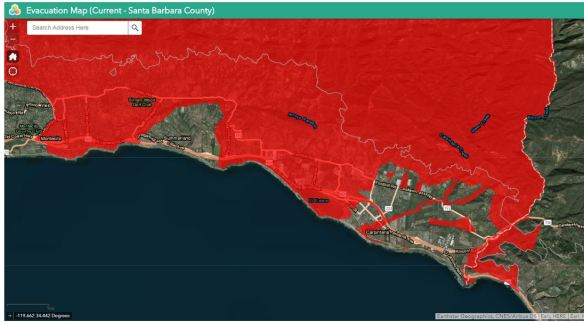
If your home is in the mandatory evacuation area, which looks to me like more than half of the Carpinteria Valley and most of Montecito, I’m sorry. It has to be terribly stressful to have to pack up and leave your home. Those of us who are not in the red zone will be looking forward to your return. But I have to say this: we who stay behind are not necessarily the lucky ones. Less threatened? Possibly. But we will be riding out a storm like we have never seen in our lifetimes.

The last pineapple express of this magnitude, to my mind, was in the mid-1990s. Some of you can remember the exact year, the Arroyo Paredon flooded the northbound 101 at Padaro and mud covered the freeway south at La Conchita. And that was with healthy hillsides covered with plants and trees.

Don’t let anyone tell you it’s like 1969 either. The Coyote Fire was 5 years earlier and there were no big debris flows in ’69. Just a lot of rain and brushy, unprepared creeks. That’s why they built the flood channels through Carpinteria; to handle water, not debris. I was only 8 but my parents tell me no one at the time mentioned that fire having any relationship to the flood.

So this is unique – historic – to have fire and epic storm so close in time. Am I being dramatic? I guess we’ll know when the sun comes up on Friday.

Stay or go, this is really going to suck. But I have faith we will survive. Pray for us who stay in the ship, and we’ll pray for you in the lifeboats. Godspeed.

evac map 2018.03.19

Hunger

“People are hungry for the imaginative language of poetry and for the authentic voice of one another, the heart-language, because so much of our experience is mediated now by propaganda, by commerce, by social media. We’re being sold to all the time. So we’re hungry for more authentic experience, and that’s what poetry is: It’s idiosyncratic language; it’s weirdness and wildness.”

Sarah Browning 

Poets & Writers interview